
1,000 & 2,000 Guineas Explained
For owners, trainers, jockeys and grooms, the Classics are the most coveted races in the world of thoroughbred horseracing. Each year, the big breeding operations set out with the aim of producing a Classic winner.
Originating in England, the Classic consist of the 1,000 Guineas, 2,000 Guineas, Derby, Oaks, and St Leger.
Each race is contested by horses aged three. Colts can run in the 2,000 Guineas, Derby and St Leger, while fillies are permitted to run in all five of the Classics. These races generally identify the very best that the breed has to offer from among the three-year old generation. This can often lead to lucrative stallion careers. In a Classic winner you can usually identify qualities of strength, pace and class.
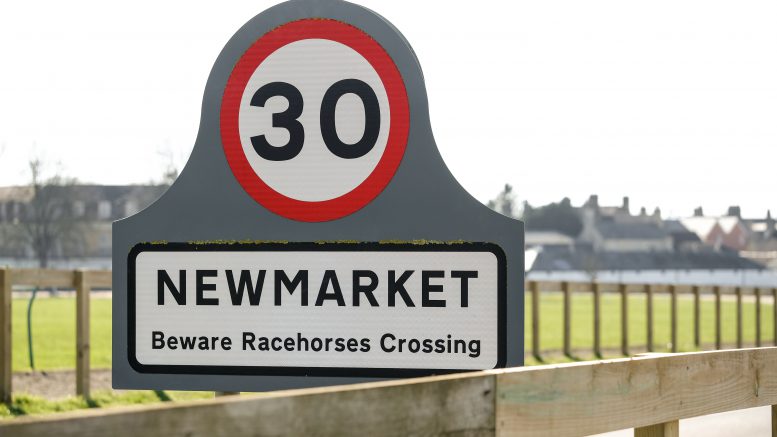
The 1,000 Guineas and 2,000 Guineas are run in Newmarket, usually in May, occasionally in April. The Derby and Oaks are run at Epsom in June, while the St Leger is run at Doncaster in September.
All racing jurisdictions around the world have their versions of these races, most of them also using the same race names. The USA is an exception, with their Classic races being the Kentucky Derby, Preakness Stakes and Belmont Stakes. These races form their ‘Triple Crown’ races.
The Triple Crown races for the colts in England are the 2,000 Guineas, Derby and Oaks. The fillies’ Triple Crown consists of the 1,000 Guineas, Oaks and St Leger.
When are the 2026 Guineas?
First up in the calendar are the 2,000 Guineas, which will be run this year on Saturday May 2nd, and the 1,000 Guineas, which will be run a day later, Sunday May 3rd.
The 2,000 Guineas was first run in 1809 and the 2,000 Guineas was first run in 1814, The Derby was first run in 1780, the Oaks in 1779 and the St Leger, the oldest Classic, was first run in 1776.
They are races with rich histories and are woven deeply into the fabric of the sporting and social calendars.
The 1,000 Guineas and 2,000 Guineas are run over the distance of one mile, while the Derby and Oaks are run over one mile, four furlongs and six yards. The St Leger is run over one mile, six furlongs and 115 yards.

1,000 Guineas and 2,000 Guineas Records
1,000 Guineas
You have to go back to the 19th Century to find the current record-holders for the 1,000 Guineas.
Between 1818 and 1827, Robert Robson trained nine 1,000 Guineas winners, while jockey George Fordham rode seven between 1859 and 1883.
The great Henry Cecil trained six 1,000 Guineas winners at Newmarket. Among trainers currently holding a licence, Aidan O’Brien unsurprisingly leads the way with seven wins, with the first of them, Virginia Waters (ridden by Kieren Fallon), coming in 2005 and the most recent, Mother Earth (Frankie Dettori), in 2021.
The now-retired Fallon and Dettori rode four 1,000 Guineas winners apiece, the same number as Ryan Moore, who still holds a licence.
2,000 Guineas:
The leading jockey, with nine wins in the race between 1825 and 1848 is Jem Robinson. The leading trainer, with eleven wins, is Aidan O’Brien. Aidan will, of course, be represented again this year. His first winner in the race was Entreprenuer (ridden by Michael Kinane) in 1997, and his most recent is Magna Grecia (Donnacha O’Brien) in 2019.
Charlie Appleby has trained three of the last four 2,000 Guineas winners, the last two ridden by William Buick. All three of the winners were owned by Godolphin, whose royal blue silks have been carried to victory six times in the race.
Two of Aidan’s winners have been ridden by Ryan Moore – Gleneagles (2015) and Churchill (2017) – his only two wins in the race so far.
The legendary Lester Piggott won the race five times, while four-time winners are Michael Kinane, Frankie Dettori and Kieren Fallon.
As mentioned at the start of this piece, the Classics are coveted races. They are particularly prestigious in England, Ireland and France. There are only five of them run each year in each of those countries. As such, there are never many chances to get onto that coveted Classic roll of honour. This year’s quest begins on the weekend of May 2nd and 3rd at Newmarket.